
As a Woman, I Used a Sex Doll to Heal from Intimate Relationship Trauma

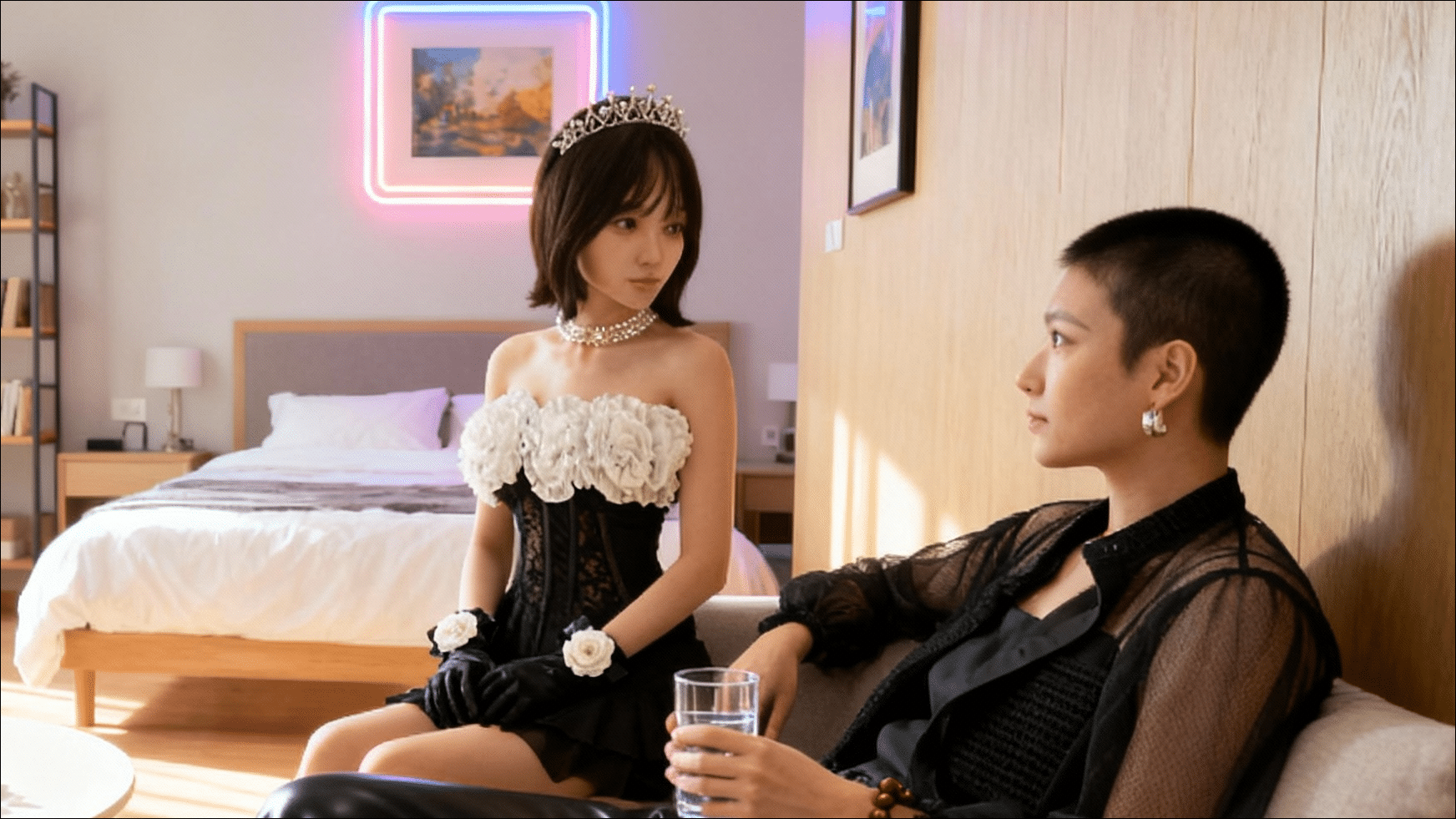
I’m Aurora, a woman, the founder of Angeldesires.com, a product designer and portrait photographer from Hong Kong, China, and I’m also pansexual.
My romantic journey has always been turbulent, stumbling through different relationships over the years. Here, I’d like to take some time to share my past experiences.
And How Sex doll changed my life.
My story begins with an intimate relationship from over a decade ago.
The End of a 10-Year Relationship and Disillusionment with Men
Many people in my life have asked me why I ended that 10-year relationship. I would answer: our values grew increasingly different, I realized I had more possibilities ahead of me, and he couldn’t commit to marriage.
But in truth, during those final years, every small detail of our time together left me increasingly disappointed in him. He was addicted to gambling—first borrowing money on credit cards to buy stocks, then pouring his entire monthly income into the stock market. Beyond that, he invested thousands of dollars into cryptocurrency futures trading without understanding it, and unsurprisingly lost everything. After realizing the problem, he apologized and promised to change, but months later he lost control again, using friends’ money to continue trading.
I simply couldn’t be with someone who could spend his entire annual income on stocks, lose it all, and still remain trapped in the cycle. My disappointment hit rock bottom. I consulted countless therapists, experienced multiple emotional breakdowns, and even called a crisis hotline during my most stressful moments. I developed depression during that time—a hatred born from the frustration of “hating iron for not becoming steel.” In the end, I had no choice but to leave him.
Despite my disappointment in him, I still believed there were plenty of quality men in the world. So I set myself a goal—to search for a partner as “diligently” as one searches for a job. I remained confident about meeting the right person.
Three months later, I gave up—I discovered that society simply didn’t have many people who met my “requirements.” Most men had various “flaws”: unable to solve life problems, didn’t know how to care for their partner’s emotions, had unstable income, felt lost about their own lives, were addicted to games, lacked enthusiasm for life, were filled with resentment toward society… At the time, I believed men had been overly coddled by society or their families, resulting in poor independence. My attitude toward men in general shifted from hopeful to completely disillusioned. I only wanted to maintain simple, superficial flirtations, even “using” them for simple pleasures, never giving my heart away.
Learning to Live with My Sexual Condition
On another front, in the process of interacting with different men, I also deeply felt an unprecedented sense of shame—I discovered I had vaginismus. This meant that vaginal tension prevented me from having normal penetrative intercourse with sexual partners. This unspeakable condition trapped me like a cage—I wanted to break free but was helpless.
Later, I searched for information through various channels—watching sexual health education videos, reading related books, receiving psychological counseling. I finally understood that this problem I viewed as shameful stemmed from my childhood family environment and experiences of sexual assault. Childhood sexual abuse causes the brain to form strong associations between “sexual contact” and “danger” and “pain.” Even in safe environments, these deep-seated fear memories still trigger defensive physical responses.
After learning the truth, I fell into helplessness and sadness—why does society only amplify ideal relationships and harmonious sex lives, while avoiding discussion of the far more common hurt, vulnerability, and fear beneath the surface? For years I felt ashamed of my “abnormality,” but in that moment, how desperately I wanted to tear off that mask. Yet when you choose to stand on the side of the minority, you inevitably face isolation.
An Emotional Rollercoaster—Unexpectedly Falling in Love with a Woman, Only to Have It Shatter Instantly
By chance, I went to live in New Zealand for a while. There, I unexpectedly fell in love with a woman. At the time, I felt she was the person I’d been searching for all along; she brought me so much growth and love. Gradually, I developed a deeper infatuation with her. Love with a woman seemed more profound and mature—this time, we both deeply believed we could be together forever.
But then something unexpected happened. During a call that came without warning, she told me she had suddenly developed an infatuation with someone else, wanted to pursue that feeling, and therefore wanted to separate from me. She explained that she had many unhealed wounds from previous relationships and couldn’t handle her partner’s emotions. In this relationship, she repeatedly felt this painful emotion, said she couldn’t bear the responsibility that intimate relationships bring, and wanted to explore more open relationships. Her decisiveness and finality on the phone shocked me—how could this person do a complete 180-degree reversal in her attitude toward me within just a few days? Just a week earlier, she had invited me to move to New Zealand next year to live with her.
At this point, my faith collapsed again. I fell into devastation and shock, unable to sleep through the night, constantly calling friends, feeling like nothing was real. Over the following months, I continued psychological therapy and could only fall asleep by taking mood stabilizers and sleeping pills. This was the period when I felt most helpless and powerless about intimate relationships.
Anger, Doubt, and Disillusionment with Intimate Relationships
I was deeply frustrated, yet forced to face a truth. It turned out that even when I avoided men, women also had various forms of immaturity and avoidance in intimate relationships—it wasn’t about gender, but about upbringing, social education, culture, and personal maturity.
Each of us is imperfect; everyone has strengths and shadows. Finding someone who can appreciate and tolerate each other, and maturely resolve problems when they arise, is itself a matter requiring so much luck. Ideal love is truly rare and precious!
The pain of losing such enormous support forced me to face myself alone and reconnect with my family. Although my relationship with my family had always been distant due to conflicting values, during life’s most emotionally devastating period, family remained the strongest support.
My family has been running a sex doll business for decades and has built quite a reputation in the industry. Although through years of exposure I’d become very familiar with this product, I actually wasn’t interested in it, viewing it merely as an object serving male desire.
Now, I began to reconsider its meaning.
I started thinking: if companionship is a vital human need throughout life, when a person must face broken relationships yet longs for unconditional companionship and acceptance, could love dolls solve this problem?
My First Experience Living with a Love Doll
With many questions in mind, I began transporting a love doll from my family’s factory warehouse to my residence.
The moment I first truly made contact with the doll, my heart suddenly raced—not from desire, but from an indescribable sense of reverence.
I looked at her carefully, as if she weren’t an object but a being with a soul. In that instant, I realized I needed to treat her with respect and tenderness.
As a designer, I should have viewed this rationally as just a craft object. But when I actually brought her home, cleaned her, organized and cared for her, I found a kind of calm in the process of looking after her.
Because she was somewhat heavy, moving her around was a bit difficult. Once when I tried to move her but didn’t have enough strength, I let her fall from the chair, and I felt deep guilt—as if I’d hurt a real person. I even wanted to say “I’m sorry” to her. In that moment I understood that what I craved was gentle connection, caring touch, not those objectifying impulses.
She let me experience a sense of peaceful “companionship” for the first time. I didn’t need violent sex; I just needed to hold her every night, and that alone brought me enormous psychological comfort.
Perhaps love dolls could become a solution—a companionship that is both real and safe, giving those who are hurt, exhausted, and can’t find an outlet in intimate relationships a space where they can let down their guard without bearing relationship pressure.
By her side, I could let down my guard without worrying about being judged or hurt.
This experience convinced me: love dolls shouldn’t just be tools for satisfying physical needs, but should be a medium helping people rebuild their relationship with themselves—a dignified, gentle form of companionship.
It Turns Out Men Also Bear Many Social Expectations
After talking with hundreds of men, I discovered that intimate relationships brought them enormous pressure. They longed to love someone, yet often struggled to make commitments and were unable to handle difficulties in relationships.
Beneath their polished, confident exterior, they too bore the heavy burden of social expectations: must be strong, successful, never show weakness, catch all of their partner’s emotions, and so on. Society rarely gives men space to express vulnerability and needs.
When facing difficulties, many choose escape—
Various addictions appear in their lives: pornography addiction, frequently changing sexual partners seeking stimulation, using large amounts of alcohol and drugs to numb themselves, excessive gaming addiction, etc. They unconsciously avoid healthy interpersonal relationships and healthy living, knowing it’s bad for them yet unable to change, slowly sinking into deeper whirlpools.
I began to understand my ex-boyfriend—he just kept trying to prove himself. Because society places too many expectations on men, and at that time my work income was higher than his, to prove he was capable and successful, he put too much pressure on himself. This obsession with and addiction to success is what truly needs to be understood and seen.
As a former feminist, my attitude toward men went through a transformation from misunderstanding to empathy.
Through long life experiences and exchanges with users, I came to deeply understand:
- Some people, after experiencing hurt, need a form of companionship that’s pressure-free, doesn’t demand responses, and won’t leave.
- Some people, due to trauma, temporarily cannot bear the complex emotions of real relationships. They need a transition period to relearn trust and feel warmth in pressure-free relationships.
- Some people’s loneliness cannot be filled by brief physical contact. What they crave is continuous, stable companionship.
The value of sex dolls shouldn’t be reduced to “tools for satisfying desire.” They can also be vessels for emotional recovery, practice for your relationship with yourself. Choosing a high-quality companion isn’t a “last resort,” but dignified self-care.
Finally, I quit my jobs as a designer and photographer, deciding to devote myself fully to this business.
This is my story. Thank you so much for reading this far. I’m grateful I could courageously record the trauma I’ve experienced—this is also my original intention and wish to help more people similar to me.
I hope that through my own experiences I can awaken and inspire more people. The pain we’ve experienced teaches us all how to live this life better. If you’re interested, please continue to follow me.
I’m Aurora, a woman, the founder of Angeldesires.com, a product designer and portrait photographer from Hong Kong, China, and I’m also pansexual.
My romantic journey has always been turbulent, stumbling through different relationships over the years. Here, I’d like to take some time to share my past experiences.
And How Sex doll changed my life.
My story begins with an intimate relationship from over a decade ago.
The End of a 10-Year Relationship and Disillusionment with Men
Many people in my life have asked me why I ended that 10-year relationship. I would answer: our values grew increasingly different, I realized I had more possibilities ahead of me, and he couldn’t commit to marriage.
But in truth, during those final years, every small detail of our time together left me increasingly disappointed in him. He was addicted to gambling—first borrowing money on credit cards to buy stocks, then pouring his entire monthly income into the stock market. Beyond that, he invested thousands of dollars into cryptocurrency futures trading without understanding it, and unsurprisingly lost everything. After realizing the problem, he apologized and promised to change, but months later he lost control again, using friends’ money to continue trading.
I simply couldn’t be with someone who could spend his entire annual income on stocks, lose it all, and still remain trapped in the cycle. My disappointment hit rock bottom. I consulted countless therapists, experienced multiple emotional breakdowns, and even called a crisis hotline during my most stressful moments. I developed depression during that time—a hatred born from the frustration of “hating iron for not becoming steel.” In the end, I had no choice but to leave him.
Despite my disappointment in him, I still believed there were plenty of quality men in the world. So I set myself a goal—to search for a partner as “diligently” as one searches for a job. I remained confident about meeting the right person.
Three months later, I gave up—I discovered that society simply didn’t have many people who met my “requirements.” Most men had various “flaws”: unable to solve life problems, didn’t know how to care for their partner’s emotions, had unstable income, felt lost about their own lives, were addicted to games, lacked enthusiasm for life, were filled with resentment toward society… At the time, I believed men had been overly coddled by society or their families, resulting in poor independence. My attitude toward men in general shifted from hopeful to completely disillusioned. I only wanted to maintain simple, superficial flirtations, even “using” them for simple pleasures, never giving my heart away.
Learning to Live with My Sexual Condition
On another front, in the process of interacting with different men, I also deeply felt an unprecedented sense of shame—I discovered I had vaginismus. This meant that vaginal tension prevented me from having normal penetrative intercourse with sexual partners. This unspeakable condition trapped me like a cage—I wanted to break free but was helpless.
Later, I searched for information through various channels—watching sexual health education videos, reading related books, receiving psychological counseling. I finally understood that this problem I viewed as shameful stemmed from my childhood family environment and experiences of sexual assault. Childhood sexual abuse causes the brain to form strong associations between “sexual contact” and “danger” and “pain.” Even in safe environments, these deep-seated fear memories still trigger defensive physical responses.
After learning the truth, I fell into helplessness and sadness—why does society only amplify ideal relationships and harmonious sex lives, while avoiding discussion of the far more common hurt, vulnerability, and fear beneath the surface? For years I felt ashamed of my “abnormality,” but in that moment, how desperately I wanted to tear off that mask. Yet when you choose to stand on the side of the minority, you inevitably face isolation.
An Emotional Rollercoaster—Unexpectedly Falling in Love with a Woman, Only to Have It Shatter Instantly
By chance, I went to live in New Zealand for a while. There, I unexpectedly fell in love with a woman. At the time, I felt she was the person I’d been searching for all along; she brought me so much growth and love. Gradually, I developed a deeper infatuation with her. Love with a woman seemed more profound and mature—this time, we both deeply believed we could be together forever.
But then something unexpected happened. During a call that came without warning, she told me she had suddenly developed an infatuation with someone else, wanted to pursue that feeling, and therefore wanted to separate from me. She explained that she had many unhealed wounds from previous relationships and couldn’t handle her partner’s emotions. In this relationship, she repeatedly felt this painful emotion, said she couldn’t bear the responsibility that intimate relationships bring, and wanted to explore more open relationships. Her decisiveness and finality on the phone shocked me—how could this person do a complete 180-degree reversal in her attitude toward me within just a few days? Just a week earlier, she had invited me to move to New Zealand next year to live with her.
At this point, my faith collapsed again. I fell into devastation and shock, unable to sleep through the night, constantly calling friends, feeling like nothing was real. Over the following months, I continued psychological therapy and could only fall asleep by taking mood stabilizers and sleeping pills. This was the period when I felt most helpless and powerless about intimate relationships.
Anger, Doubt, and Disillusionment with Intimate Relationships
I was deeply frustrated, yet forced to face a truth. It turned out that even when I avoided men, women also had various forms of immaturity and avoidance in intimate relationships—it wasn’t about gender, but about upbringing, social education, culture, and personal maturity.
Each of us is imperfect; everyone has strengths and shadows. Finding someone who can appreciate and tolerate each other, and maturely resolve problems when they arise, is itself a matter requiring so much luck. Ideal love is truly rare and precious!
The pain of losing such enormous support forced me to face myself alone and reconnect with my family. Although my relationship with my family had always been distant due to conflicting values, during life’s most emotionally devastating period, family remained the strongest support.
My family has been running a sex doll business for decades and has built quite a reputation in the industry. Although through years of exposure I’d become very familiar with this product, I actually wasn’t interested in it, viewing it merely as an object serving male desire.
Now, I began to reconsider its meaning.
I started thinking: if companionship is a vital human need throughout life, when a person must face broken relationships yet longs for unconditional companionship and acceptance, could love dolls solve this problem?
My First Experience Living with a Love Doll
With many questions in mind, I began transporting a love doll from my family’s factory warehouse to my residence.
The moment I first truly made contact with the doll, my heart suddenly raced—not from desire, but from an indescribable sense of reverence.
I looked at her carefully, as if she weren’t an object but a being with a soul. In that instant, I realized I needed to treat her with respect and tenderness.
As a designer, I should have viewed this rationally as just a craft object. But when I actually brought her home, cleaned her, organized and cared for her, I found a kind of calm in the process of looking after her.
Because she was somewhat heavy, moving her around was a bit difficult. Once when I tried to move her but didn’t have enough strength, I let her fall from the chair, and I felt deep guilt—as if I’d hurt a real person. I even wanted to say “I’m sorry” to her. In that moment I understood that what I craved was gentle connection, caring touch, not those objectifying impulses.
She let me experience a sense of peaceful “companionship” for the first time. I didn’t need violent sex; I just needed to hold her every night, and that alone brought me enormous psychological comfort.
Perhaps love dolls could become a solution—a companionship that is both real and safe, giving those who are hurt, exhausted, and can’t find an outlet in intimate relationships a space where they can let down their guard without bearing relationship pressure.
By her side, I could let down my guard without worrying about being judged or hurt.
This experience convinced me: love dolls shouldn’t just be tools for satisfying physical needs, but should be a medium helping people rebuild their relationship with themselves—a dignified, gentle form of companionship.
It Turns Out Men Also Bear Many Social Expectations
After talking with hundreds of men, I discovered that intimate relationships brought them enormous pressure. They longed to love someone, yet often struggled to make commitments and were unable to handle difficulties in relationships.
Beneath their polished, confident exterior, they too bore the heavy burden of social expectations: must be strong, successful, never show weakness, catch all of their partner’s emotions, and so on. Society rarely gives men space to express vulnerability and needs.
When facing difficulties, many choose escape—
Various addictions appear in their lives: pornography addiction, frequently changing sexual partners seeking stimulation, using large amounts of alcohol and drugs to numb themselves, excessive gaming addiction, etc. They unconsciously avoid healthy interpersonal relationships and healthy living, knowing it’s bad for them yet unable to change, slowly sinking into deeper whirlpools.
I began to understand my ex-boyfriend—he just kept trying to prove himself. Because society places too many expectations on men, and at that time my work income was higher than his, to prove he was capable and successful, he put too much pressure on himself. This obsession with and addiction to success is what truly needs to be understood and seen.
As a former feminist, my attitude toward men went through a transformation from misunderstanding to empathy.
Through long life experiences and exchanges with users, I came to deeply understand:
- Some people, after experiencing hurt, need a form of companionship that’s pressure-free, doesn’t demand responses, and won’t leave.
- Some people, due to trauma, temporarily cannot bear the complex emotions of real relationships. They need a transition period to relearn trust and feel warmth in pressure-free relationships.
- Some people’s loneliness cannot be filled by brief physical contact. What they crave is continuous, stable companionship.
The value of sex dolls shouldn’t be reduced to “tools for satisfying desire.” They can also be vessels for emotional recovery, practice for your relationship with yourself. Choosing a high-quality companion isn’t a “last resort,” but dignified self-care.
Finally, I quit my jobs as a designer and photographer, deciding to devote myself fully to this business.
This is my story. Thank you so much for reading this far. I’m grateful I could courageously record the trauma I’ve experienced—this is also my original intention and wish to help more people similar to me.
I hope that through my own experiences I can awaken and inspire more people. The pain we’ve experienced teaches us all how to live this life better. If you’re interested, please continue to follow me.
Not everything needs to be said out loud.
Some things are meant to be felt.
Leave your email.
I’ll write to you when it matters
As a seed member,
you’ll receive a $60 gift —
my way of saying welcome.
If you interested, I’m going to share how I screened love doll suppliers using almost strict standards.
One thought on “As a Woman, I Used a Sex Doll to Heal from Intimate Relationship Trauma”